Top Digital Skills Students Need for Future Careers
Introduction
The modern workplace is evolving rapidly due to technological advancements, artificial intelligence, automation, and digital transformation. As industries continue to embrace new technologies, students must develop the right digital skills to remain competitive in future careers.
Today, employers are looking beyond academic qualifications. They seek candidates who can adapt to technology, communicate effectively, analyze data, and solve problems in a digital-first environment. Developing these skills early can help students unlock better career opportunities and prepare for the future workforce.
This guide explores the most important digital skills students need to succeed in the modern job market.
Why Digital Skills Are Important for Students
Digital skills have become essential across almost every industry, including healthcare, education, finance, marketing, engineering, and business management.
Students with strong digital competencies can:
● Improve employability
● Adapt to changing technologies
● Increase productivity
● Access global career opportunities
● Work effectively in remote and hybrid environments
As technology continues to reshape industries, digital literacy is no longer optional—it's a necessity.
Top Digital Skills Students Need for Future Careers
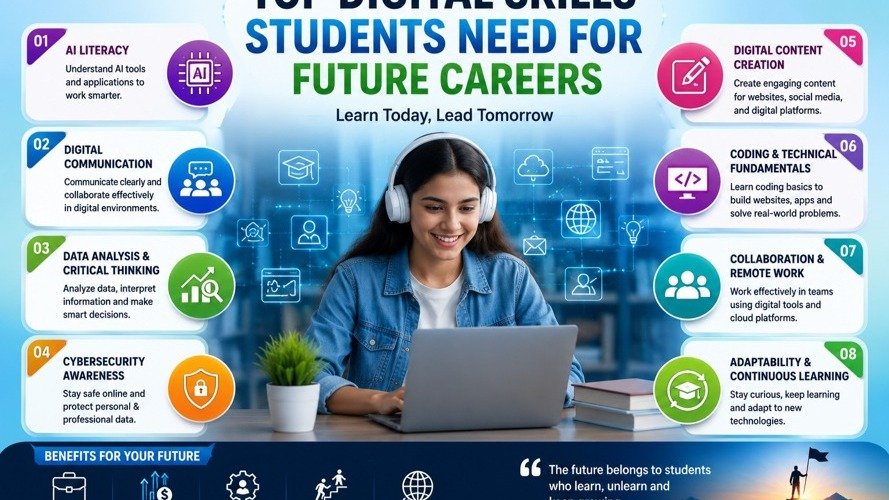
1. Artificial Intelligence (AI) Literacy
Artificial Intelligence is transforming how businesses operate. Understanding AI tools and their applications can provide students with a significant advantage in the job market.
Students should learn:
● How AI tools work
● Responsible AI usage
● AI-powered productivity tools
● AI-assisted research techniques
● Prompt engineering basics
AI literacy helps students work smarter while preparing them for future technology-driven careers.
2. Digital Communication Skills
Effective communication remains one of the most valuable workplace skills.
Students should develop the ability to:
● Write professional emails
● Communicate through digital platforms
● Participate in virtual meetings
● Create presentations
● Collaborate with remote teams
Strong communication skills improve teamwork and professional growth.
3. Data Analysis and Critical Thinking
Organizations rely heavily on data-driven decisions.
Students who can collect, interpret, and analyze data gain a competitive advantage. Important areas include:
● Spreadsheet management
● Data visualization
● Research skills
● Analytical thinking
● Problem-solving
These skills help students make informed decisions and understand complex information.
4. Cybersecurity Awareness
As digital technology becomes more widespread, cybersecurity is increasingly important.
Students should understand:
● Online privacy protection
● Password security
● Phishing threats
● Safe internet practices
● Data protection fundamentals
Cybersecurity awareness helps protect personal and professional information.
5. Digital Content Creation
Students can benefit from learning:
● Graphic design
● Video editing
● Content writing
● Social media management
● Presentation design
Creative digital skills open opportunities in marketing, media, education, and entrepreneurship.
6. Coding and Technical Fundamentals
While not every student needs to become a software developer, understanding basic coding concepts can be highly beneficial.
Popular skills include:
● HTML and CSS
● Python fundamentals
● Website development basics
● Automation concepts
● Technical problem-solving
Coding helps students develop logical thinking and innovation skills.
7. Collaboration and Remote Working Skills
Modern workplaces increasingly rely on digital collaboration tools. Students should become familiar with:
● Project management platforms
● Cloud-based collaboration
● Virtual teamwork
● Online productivity tools
● Digital workflow management
These skills prepare students for remote and hybrid work environments.
How Students Can Start Building Digital Skills
Students can begin developing digital skills through:
Online Courses
Many platforms offer free and affordable courses covering AI, coding, data analysis, and digital marketing.
Practical Projects
Applying knowledge through real-world projects helps build confidence and experience.
Internships
Internships provide valuable exposure to workplace technologies and professional environments.
Continuous Learning
Technology evolves rapidly, making lifelong learning essential for career growth.
Benefits of Digital Skills for Future Careers
Students who develop strong digital skills often experience:
✅ Better job opportunities
✅ Higher earning potential
✅ Greater workplace productivity
✅ Improved adaptability
✅ Stronger professional networks
✅ Increased career growth opportunities
Employers increasingly value candidates who can effectively use technology to solve problems and improve business outcomes.
Frequently Asked Questions
What are digital skills?
Digital skills are the abilities required to use technology, software, and digital tools effectively for learning, communication, problem-solving, and professional work
Why are digital skills important for students?
Digital skills help students prepare for future careers, improve employability, and adapt to technology-driven workplaces.
Which digital skill is most important for future jobs?
AI literacy, digital communication, data analysis, and problem-solving are among the most valuable skills for future careers.
Can students learn digital skills without a technical background?
Yes. Many digital skills can be learned through online courses, practice, and hands-on projects regardless of prior experience.
How can students improve their digital skills?
Students can improve by taking online courses, completing projects, participating in internships, and staying updated with emerging technologies.
Conclusion
The future job market will increasingly reward individuals who combine technical knowledge with strong digital capabilities. From AI literacy and data analysis to communication and cybersecurity awareness, digital skills are becoming essential for career success.
Students who invest in developing these competencies today will be better prepared to navigate future workplace challenges, seize new opportunities, and thrive in an increasingly digital world.
By embracing continuous learning and technological innovation, students can build a strong foundation for long-term professional growth and success.
Category: Education
Author: Techstas Research
Read time: 5 min read
Discover the most important digital skills students need for future careers. Learn how technology, AI, communication, and problem-solving skills can help students succeed in the digital age