Top Cloud & DevOps Trends in 2026: The Future of Cloud Computing & Automation

Introduction
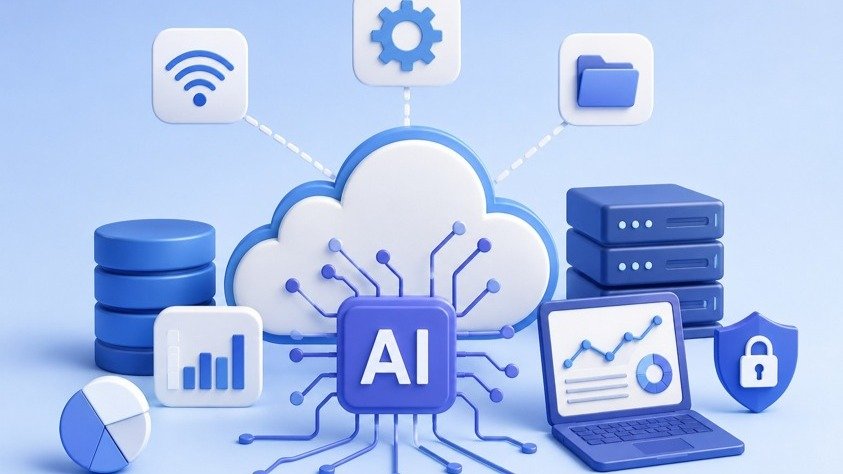
Cloud computing and DevOps are rapidly transforming the technology industry in 2026. Businesses worldwide are adopting modern cloud infrastructure and DevOps automation practices to improve scalability, security, software delivery speed, and operational efficiency.
From startups to large enterprises, organisations are moving toward cloud-native applications, Kubernetes orchestration, AI-powered automation, and multi-cloud environments to remain competitive in the digital era.
Technologies like Kubernetes, DevSecOps, serverless computing, and Infrastructure as Code are reshaping how businesses develop, deploy, and manage applications.
In this blog, we explore the latest Cloud Computing and DevOps trends in 2026, their business impact, and why organizations must adopt these technologies for future growth.
What Is Cloud Computing?
Cloud computing refers to delivering computing services such as servers, storage, databases, networking, and software through the internet instead of relying on physical infrastructure.
Leading cloud providers like Amazon Web Services, Microsoft Azure, and Google Cloud continue to dominate the cloud industry with scalable and flexible solutions.
Benefits of Cloud Computing
● Scalability and flexibility
● Reduced infrastructure costs
● Faster application deployment
● Improved business continuity
● Enhanced collaboration and accessibility
Cloud computing has become the foundation of digital transformation and enterprise IT modernisation.
What Is DevOps?
DevOps is a modern software development methodology that combines development and IT operations to improve collaboration, automation, and software delivery efficiency.
DevOps focuses on:
Continuous Integration and Continuous Delivery (CI/CD)
Infrastructure automation
Cloud deployment
Monitoring and performance optimization
Faster release cycles
Key Benefits of DevOps
Faster software deployment
Automated workflows
Reduced downtime
Better collaboration between teams
Improved system reliability
DevOps is essential for businesses adopting cloud-native infrastructure and scalable application development.
Top Cloud & DevOps Trends in 2026
1. AI-Powered DevOps (AIOps)
Artificial Intelligence is transforming DevOps workflows through automation and predictive monitoring.
AI-powered DevOps tools analyze infrastructure performance, detect anomalies, and automate troubleshooting processes before failures occur.
Advantages of AIOps
● Predictive issue detection
● Automated incident management
● Real-time monitoring
● Reduced operational costs
● Improved infrastructure performance
AI in DevOps is becoming one of the biggest Cloud Computing trends in 2026.
2. Multi-Cloud and Hybrid Cloud Strategies
Businesses are increasingly adopting multi-cloud and hybrid cloud environments for flexibility and scalability.
Multi-cloud strategies help organizations distribute workloads across different cloud providers while hybrid cloud combines private and public cloud infrastructure.
Why Multi-Cloud Is Trending
● Avoids vendor lock-in
● Improves disaster recovery
● Enhances scalability
● Strengthens business continuity
● Optimizes performance
Modern enterprises now prioritize resilient cloud infrastructure and cloud security strategies.
3. Kubernetes and Containerization
Containerization continues to dominate modern DevOps workflows in 2026.
Technologies like Docker and Kubernetes simplify application deployment, scalability, and infrastructure management.
Benefits of Kubernetes
● Automated scaling
● Faster deployments
● High availability
● Better resource optimization
● Simplified container orchestration
Kubernetes has become the standard platform for cloud-native application deployment.
4. DevSecOps and Cloud Security
Cybersecurity remains a major concern for businesses adopting cloud infrastructure.
DevSecOps integrates security directly into the DevOps lifecycle to ensure continuous security monitoring and compliance.
DevSecOps Best Practices
● Automated security testing
● Secure CI/CD pipelines
● Identity and access management
● Continuous compliance monitoring
● Vulnerability scanning
Cloud security and DevSecOps are now essential components of enterprise DevOps strategies.
5. Serverless Computing
Serverless computing is becoming increasingly popular because developers can build applications without managing servers manually.
Cloud providers automatically manage infrastructure while developers focus entirely on coding and functionality.
Benefits of Serverless Architecture
● Lower infrastructure costs
● Automatic scaling
● Faster development cycles
● Reduced maintenance
● Improved flexibility
Serverless computing helps startups and businesses accelerate cloud application deployment.
6. Infrastructure as Code (IaC)
Infrastructure as Code enables businesses to automate infrastructure provisioning using code instead of manual configuration.
Popular IaC tools include Terraform and Ansible.
Benefits of Infrastructure as Code
● Faster infrastructure deployment
● Reduced configuration errors
● Consistent cloud environments
● Improved scalability
● Better DevOps collaboration
IaC is one of the most important DevOps automation practices in modern cloud computing.
7. Edge Computing
Edge computing processes data closer to devices and users instead of centralized cloud servers.
This reduces latency and improves real-time application performance.
Common Edge Computing Applications
● Smart cities
● IoT devices
● Autonomous vehicles
● Healthcare monitoring systems
● Real-time gaming platforms
Edge computing is expected to grow significantly alongside cloud-native technologies.
8. GitOps for Automated Deployments
GitOps is becoming a preferred DevOps operational framework for managing Kubernetes deployments and infrastructure automation.
Git repositories act as the single source of truth for infrastructure configuration and deployment management.
Benefits of GitOps
● Faster rollback capabilities
● Improved version control
● Simplified deployment management
● Better collaboration
● Enhanced auditing and tracking
GitOps improves automation and reliability in cloud-native DevOps environments.
9. Platform Engineering
Platform engineering helps organizations create centralized internal developer platforms for standardized workflows and infrastructure automation.
Advantages of Platform Engineering
● Improved developer productivity
● Faster software delivery
● Reduced operational complexity
● Better scalability
● Standardized workflows
Large enterprises are increasingly investing in platform engineering for efficient DevOps management.
10. Sustainable and Green Cloud Computing
Green cloud computing is becoming a major focus in the technology industry.
Cloud providers are investing in energy-efficient data centers and renewable energy-powered infrastructure.
Green Cloud Initiatives
● Renewable-powered data centers
● Carbon-aware computing
● Energy-efficient cloud infrastructure
● Sustainable software development
● Optimized cloud resource usage
Sustainable cloud computing supports both environmental goals and operational efficiency.
Future of Cloud Computing & DevOps
The future of Cloud Computing and DevOps will focus on:
● AI-driven automation
● Advanced cloud security
● Cloud-native applications
● Fully automated infrastructure
● Real-time data processing
● Scalable Kubernetes deployments
Businesses adopting modern cloud technologies and DevOps automation will gain significant competitive advantages in digital transformation.
Final Thoughts
Cloud computing and DevOps are redefining modern technology infrastructure in 2026. From Kubernetes orchestration and AI-powered DevOps to serverless computing and cloud automation, organizations are rapidly modernizing their IT environments.
Cloud platforms provide scalability and flexibility, while DevOps enables faster software delivery, automation, and operational efficiency.
Companies that stay updated with the latest Cloud Computing and DevOps trends can improve security, reduce costs, and accelerate digital transformation successfully.
Category: Cloud & DevOps
Author: Techstas Research
Read time: 5 min read
Cloud computing and DevOps are rapidly transforming the technology industry in 2026. Businesses worldwide are adopting modern cloud infrastructure and DevOps automation practices to improve scalability, security, software delivery speed, a...