
How AI and Advanced Cloud Technologies Are Shaping the Future of Business
Artificial Intelligence and cloud technologies are reshaping business operations through automation, scalability, and data-driven insights. Discover…

Learn how to control rising cloud costs with practical FinOps strategies. Explore a six-step checklist covering budget alerts, resource optimization, AI spending, and cloud cost management across hybrid and multi-cloud environments.
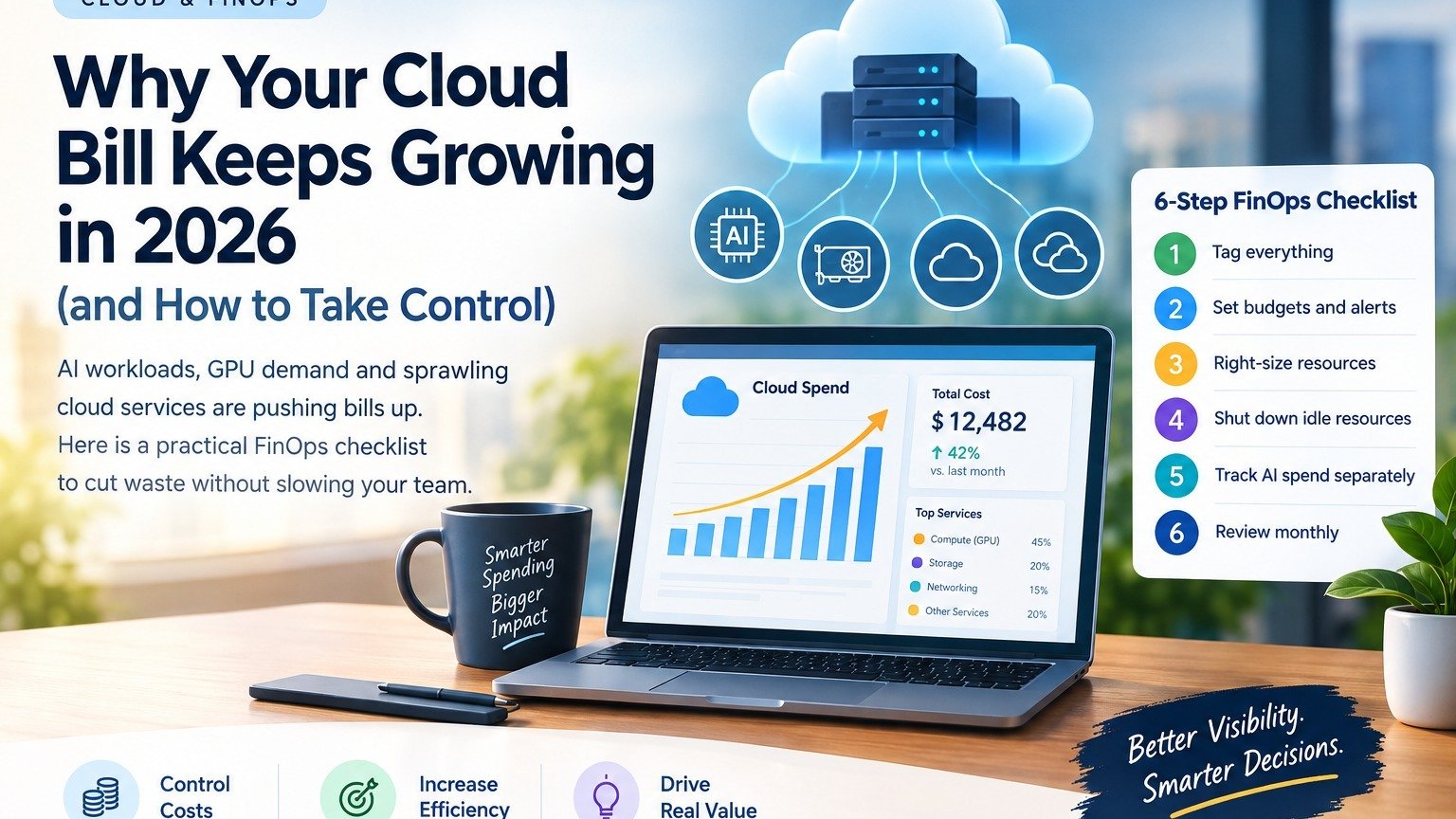
Cloud was sold as pay-for-what-you-use. In 2026, many teams are discovering they are paying for far more than they use. The cause is not one thing. It is a mix of AI workloads, fast-changing services, and weak cost visibility.
Why Are Cloud Bills Rising?
1. AI workloads are expensive. Training and running AI models needs GPUs, and industry commentary expects GPU costs to stay high. Treat this as a forecast, not a guarantee, but plan for it.
2. Cost overruns from skill gaps. Providers keep launching new services. Teams that don’t fully understand the pricing model of each one often overspend without noticing.
3. Unoptimized architecture. Oversized servers, idle resources, and wrong billing models are old problems that grow quietly as environments grow.
4. More providers, less visibility. Multi-cloud and hybrid setups improve flexibility, but spending spread across platforms is harder to track.
What Is FinOps?
FinOps is a practice where engineering, finance, and business teams share responsibility for cloud spending. The goal is not simply to spend less. It is to make sure every rupee or dollar spent creates value. Many organizations are now adding AI-driven insights to spot waste faster.
A Practical Six-Step Cloud Cost Optimization Checklist
1. Tag everything. Every resource should show which team, project, and environment owns it.
2. Set budgets and alerts. Get warned at 50%, 80%, and 100% of the monthly budget, before the invoice arrives.
3. Right-size resources. Compare what you provisioned with what you actually use.
4. Shut down idle resources. Dev and test environments rarely need to run at night or on weekends.
5. Track AI spend separately. GPU and AI service costs behave differently from regular compute.
6. Review monthly. Make cost review a regular meeting, not an emergency.
Common Cloud Cost Management Mistakes
• Treating cost as the finance team’s problem only
• Starting AI projects without a cost estimate
• Using multiple clouds without a single view of spending
• Optimizing once and never checking again
Managing Costs in Hybrid and Multi-Cloud Environments
If you are weighing hybrid or multi-cloud, cost visibility should come first. More environments mean more places for spending to hide. Set your governance and cost rules before you expand.
Conclusion
Rising cloud cost are not inevitable, but they are the default if nobody is watching. Start with tagging and budgets, track AI spend on its own, and review regularly. Small, consistent habits beat one-time clean-ups.
Keep reading

Artificial Intelligence and cloud technologies are reshaping business operations through automation, scalability, and data-driven insights. Discover…

Cloud computing and DevOps are rapidly transforming the technology industry in 2026. Businesses worldwide are adopting modern cloud infrastructure…

Protect your business from cyber threats with six practical cybersecurity best practices covering passwords, phishing, updates, backups, access…
Our team can help you put these ideas to work — from AI creatives to the systems behind them.