Top Cybersecurity Trends for 2026: What Businesses Need to Know
As technology continues to evolve, cyber threats are becoming more sophisticated, frequent, and difficult to detect. Businesses of all sizes are increasingly relying on digital platforms, cloud services, artificial intelligence, and connected devices, making cybersecurity more important than ever.
In 2026, organizations are facing a rapidly changing threat landscape where traditional security measures alone are no longer enough. From AI-powered cyberattacks to growing concerns around data privacy and ransomware, businesses must stay informed about emerging cybersecurity trends to protect their systems, customers, and reputation.
This blog explores the top cybersecurity trends shaping 2026 and explains how organizations can prepare for the future of digital security.
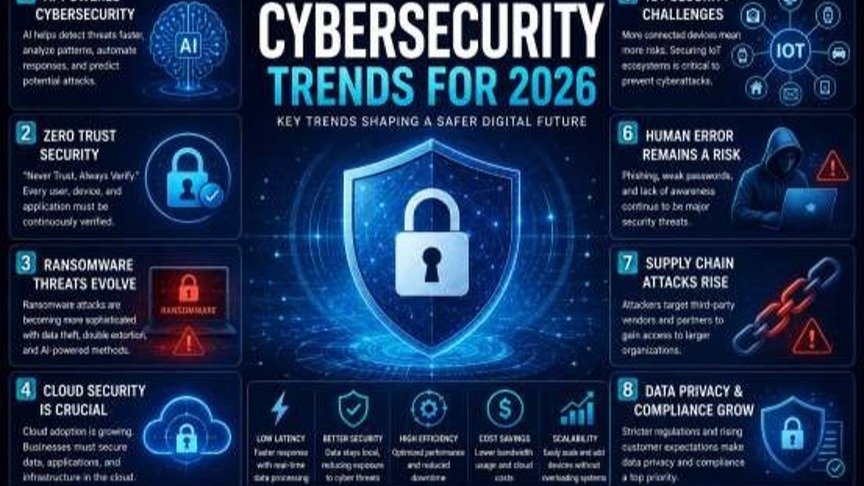
1. AI-Powered Cybersecurity Becomes Essential
Artificial Intelligence is transforming cybersecurity on both sides of the battlefield. Security teams are using AI to:
● Detect threats faster
● Analyse massive amounts of security data
● Identify suspicious activities
● Automate incident response
● Predict potential attacks
At the same time, cybercriminals are also using AI to create more advanced phishing campaigns, malware, and social engineering attacks.
As a result, businesses are investing heavily in AI-driven security solutions that can identify and respond to threats in real time.
Benefits of AI in Cybersecurity:
● Faster threat detection
● Reduced response times
● Improved threat intelligence
● Automated security monitoring
● Enhanced protection against evolving attacks
2. Zero Trust Security Is Becoming the Standard
The traditional approach of trusting users inside a network is no longer effective. Zero Trust operates on a simple principle:
"Never Trust, Always Verify."
Every user, device, and application must be continuously authenticated and authorized before accessing resources.
Organizations are adopting Zero Trust frameworks because modern work environments involve:
● Remote employees
● Cloud applications
● Mobile devices
● Third-party vendors
● Distributed networks
Key Components of Zero Trust:
● Multi-factor authentication (MFA)
● Continuous verification
● Least-privilege access
● Device validation
● Network segmentation
Businesses implementing Zero Trust are significantly reducing their exposure to cyber threats.
3. Ransomware Attacks Continue to Evolve
Ransomware remains one of the most dangerous cybersecurity threats in 2026. Attackers are becoming more sophisticated by using:
● Double extortion tactics
● Data theft before encryption
● AI-enhanced attack methods
● Supply chain infiltration
● Targeted attacks against critical infrastructure
Instead of simply locking files, attackers now threaten to publish stolen data unless a ransom is paid.
How Businesses Can Protect Themselves:
● Regular data backups
● Employee security training
● Endpoint protection
● Network monitoring
● Incident response planning
Organizations that prepare in advance can recover faster and minimize operational disruptions.
4. Cloud Security Remains a Top Priority
Cloud adoption continues to accelerate worldwide. Businesses increasingly rely on:
● Cloud storage
● SaaS platforms
● Hybrid cloud environments
● Multi-cloud architectures
● Remote collaboration tools
While cloud platforms offer flexibility and scalability, they also introduce new security challenges.
Common cloud security concerns include:
● Misconfigured settings
● Unauthorized access
● Data breaches
● Insider threats
● Insecure APIs
Best Practices for Cloud Security:
● Strong access controls
● Data encryption
● Continuous monitoring
● Security audits
● Identity and access management (IAM)
Organizations that prioritize cloud security can better protect sensitive information and maintain compliance.
5. Cybersecurity for IoT Devices Is Growing
The Internet of Things (IoT) continues to expand rapidly. Connected devices now include:
● Smart home systems
● Wearables
● Industrial equipment
● Medical devices
● Smart city infrastructure
Each connected device represents a potential entry point for cybercriminals.
Major IoT Security Challenges:
● Weak passwords
● Outdated firmware
● Lack of encryption
● Insecure device configurations
● Limited security monitoring
Businesses must ensure that IoT devices are properly secured to prevent unauthorized access and data breaches.
6. Human Error Remains the Biggest Risk
Despite advances in security technology, human error continues to be one of the leading causes of cybersecurity incidents.
Common mistakes include:
● Clicking phishing links
● Using weak passwords
● Sharing sensitive information
● Misconfiguring systems
● Ignoring security policies
Cybercriminals often target employees because people are easier to exploit than technology.
Building a Security-Aware Culture:
Organizations should provide:
● Regular cybersecurity training
● Phishing awareness programs
● Password security education
● Incident reporting procedures
● Security best-practice workshops
A well-trained workforce is one of the strongest defenses against cyber threats.
7. Supply Chain Attacks Are Increasing
Modern businesses depend on numerous third-party vendors, software providers, and service partners.
Cybercriminals are increasingly targeting these suppliers to gain access to larger organizations.
Supply chain attacks can impact:
● Software vendors
● Cloud providers
● Technology partners
● Contractors
● Service providers
How to Reduce Supply Chain Risk:
● Assess vendor security practices
● Monitor third-party access
● Conduct regular audits
● Implement Zero Trust policies
● Require security compliance standards
Managing third-party risks is becoming a critical part of cybersecurity strategy.
8. Data Privacy and Regulatory Compliance Are Expanding
Governments worldwide are introducing stricter regulations to protect consumer data.
Organisations must comply with evolving privacy requirements while maintaining strong security controls.
Key focus areas include:
● Data protection
● User consent
● Transparency
● Data retention policies
● Cross-border data management
Businesses that fail to comply with regulations risk financial penalties and reputational damage.
Benefits of Strong Data Governance:
● Improved customer trust
● Better compliance
● Reduced legal risks
● Stronger data protection
● Enhanced business reputation
9. Cybersecurity Skills Shortages Continue
Demand for cybersecurity professionals continues to exceed supply.
Organisations are struggling to fill roles such as:
● Security analysts
● Threat hunters
● Cloud security specialists
● Incident responders
● Security engineers
To address this challenge, companies are increasingly using:
● AI-powered security tools
● Security automation
● Managed security services
● Upskilling programs
● Cybersecurity training initiatives
Investing in talent development is becoming essential for long-term security success.
The Future of Cybersecurity:
The future of cybersecurity will be driven by a combination of:
● Artificial Intelligence
● Automation
● Zero Trust architectures
● Advanced threat intelligence
● Real-time monitoring
● Stronger regulatory frameworks
Organizations that embrace modern security strategies will be better equipped to protect their systems and adapt to emerging threats.
Cybersecurity is no longer just an IT responsibility—it has become a strategic business priority that directly impacts operational resilience, customer trust, regulatory compliance, and long-term growth.
Conclusion:
The cybersecurity landscape in 2026 is more dynamic and challenging than ever before. As businesses continue to embrace digital transformation, they must also adapt to increasingly sophisticated cyber threats. From AI-driven attacks and ransomware to cloud vulnerabilities, IoT security concerns, and evolving compliance requirements, organizations face a wide range of risks that demand proactive attention.
Success in this environment requires more than traditional security tools. Businesses must adopt modern cybersecurity strategies, including AI-powered threat detection, Zero Trust frameworks, robust cloud security measures, continuous employee training, and comprehensive risk management practices.
Organizations that prioritize cybersecurity today will be better equipped to protect sensitive data, maintain customer trust, ensure regulatory compliance, and support long-term business growth.
Stay Ahead of Emerging Threats:
Cybersecurity is not a one-time investment—it's an ongoing commitment. By staying informed about the latest trends and implementing a proactive security strategy, businesses can strengthen their resilience and confidently navigate the digital future.
Looking to strengthen your organization's cybersecurity posture? Our experts can help you implement advanced security strategies, assess vulnerabilities, and build a resilient defense against evolving cyber threats. Contact us today to learn how we can support your cybersecurity journey.
Category: Industry Trends
Author: Techstas Research
Read time: 5 min read
Cybersecurity is evolving rapidly in 2026 as businesses face increasingly sophisticated threats powered by AI, ransomware, and cloud vulnerabilities. From Zero Trust security frameworks to enhanced data privacy measures, organizations must...