Meta vs Google 2026: Who Is Winning the Future of Digital Advertising?
Digital advertising is evolving faster than ever, and two companies continue to dominate the conversation: Meta and Google.
As artificial intelligence, automation, and data-driven marketing reshape the industry, businesses are asking one important question:
Who is winning the future of digital advertising in 2026—Meta or Google?
The answer isn't as simple as choosing one platform over the other. Both companies have unique strengths, advanced advertising technologies, and billions of active users. Understanding how they differ can help businesses make smarter marketing decisions and achieve better results.
The Digital Advertising Industry in 2026
The digital marketing landscape has changed significantly over the past few years. Consumers now spend more time online than ever before, discovering products through social media, search engines, videos, and AI-powered recommendations.
Advertisers are no longer focused solely on reaching large audiences. Instead, they want to reach the right audience at the right time with the right message.
This shift has made Meta and Google more important than ever.
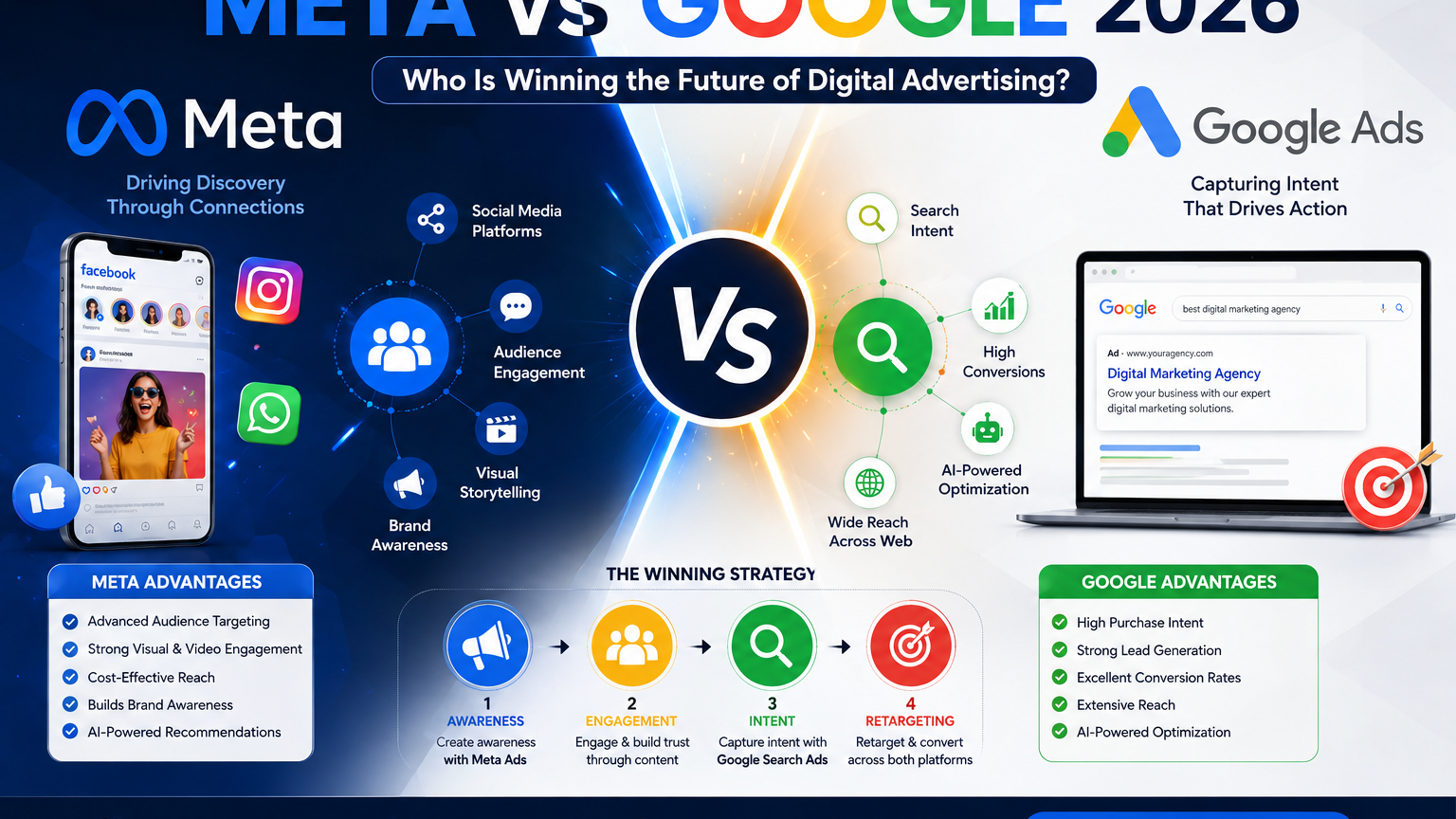
While Google dominates search-based advertising, Meta excels at social media advertising and audience engagement. Together, they control a major share of the global digital advertising market.
Understanding Google's Advertising Power
Google has built its advertising empire around one simple concept: intent.
When people search for products, services, or information, they reveal exactly what they need. Google helps businesses appear in front of those users at the perfect moment.
Why Businesses Choose Google Ads
● High purchase intent audiences
● Strong lead generation capabilities
● Excellent conversion rates
● Global reach through Search, YouTube, and Display Network
● AI-powered campaign optimization
For example, if someone searches for "best digital marketing agency" or "SEO services near me," Google allows businesses to appear directly in search results.
This makes Google one of the most effective platforms for generating qualified leads and driving immediate sales.
Why Meta Continues to Dominate Social Advertising
Meta owns some of the world's most popular social platforms, including Facebook, Instagram, WhatsApp, and Threads.
Unlike Google, Meta focuses on discovery.
Users may not actively search for products, but Meta's sophisticated algorithms help businesses reach potential customers based on interests, behavior, demographics, and engagement patterns.
Benefits of Meta Advertising
● Advanced audience targeting
● Cost-effective advertising options
● Powerful visual storytelling
● Strong engagement through reels and video content
● Brand awareness and customer relationship building
Meta excels at helping businesses introduce products to audiences who may not even know they need them yet.
This ability to create demand makes Meta an essential platform for modern marketers.
The Role of Artificial Intelligence
Artificial intelligence is transforming digital advertising in ways that were unimaginable just a few years ago.
Both Meta and Google are investing billions of dollars into AI technologies that improve campaign performance and automate marketing processes.
AI Features Changing Advertising
● Automated audience targeting
● Smart bidding strategies
● AI-generated ad creatives
● Predictive customer behavior analysis
● Real-time campaign optimization
● Personalized customer experiences
Today, advertisers can launch campaigns faster and achieve better results with less manual effort.
AI has become one of the biggest factors driving competition between Meta and Google.
Meta vs Google: Audience Targeting
Audience targeting remains one of the most important aspects of digital marketing.
Google's Approach
Google targets users based on:
● Search queries
● Keywords
● Browsing behavior
● Purchase intent
● Website activity
This helps businesses connect with customers who are already looking for solutions.
Meta's Approach
Meta targets users based on:
● Interests
● Demographics
● Online behavior
● Engagement history
● Social interactions
This allows brands to reach highly specific audiences and build awareness before users begin searching.
Both approaches are effective, but they serve different purposes within the customer journey.
Which Platform Delivers Better ROI?
Return on investment depends on business goals.
Google Often Performs Better For:
● Lead generation
● Local businesses
● Service-based companies
● High-intent purchases
● E-commerce conversions
Meta Often Performs Better For:
● Brand awareness
● Product launches
● Community building
● Visual brands
● Customer engagement
Businesses that combine both platforms often see the strongest results because they can attract customers at multiple stages of the buying process.
The Winning Strategy for 2026
Rather than choosing between Meta and Google, successful businesses are using both platforms together.
A modern digital marketing funnel typically looks like this:
Stage 1: Awareness
Use Meta Ads to introduce your brand and reach new audiences.
Stage 2: Engagement
Build trust through videos, reels, educational content, and social interactions.
Stage 3: Search Intent
Capture interested customers through Google Search Ads when they actively seek solutions.
Stage 4: Retargeting
Use Meta and Google remarketing campaigns to bring visitors back and increase conversions.
This multi-platform strategy helps businesses maximize visibility and improve advertising performance.
What the Future Looks Like
The future of digital advertising will be driven by:
● Artificial intelligence
● Personalised experiences
● Predictive marketing
● Voice and visual search
● Automated campaign management
● Privacy-focused advertising solutions
Google is becoming more discovery-focused, while Meta continues improving AI-powered recommendations and advertising automation.
As these platforms evolve, marketers who adapt quickly will gain a significant competitive advantage.
Final Thoughts
The debate between Meta and Google isn't about which platform is better overall. It's about understanding how each platform contributes to business growth.
Google remains the leader in capturing customer intent, while Meta continues to dominate audience discovery and engagement.
Businesses that successfully combine the strengths of both platforms will be best positioned to thrive in the future of digital advertising.
As AI continues to reshape marketing, the real winners won't be Meta or Google alone—it will be the brands that use these platforms strategically to connect with customers and drive meaningful results.
Category: Digital Marketing
Author: Techstas Research
Read time: 5 min read
Explore the battle between Meta and Google in 2026. Learn how AI, digital advertising, Google Ads, and Meta Ads are shaping the future of marketing and helping businesses achieve better ROI.